We are not here to talk anyone out of their coffee. Plenty of our patients on the Mountain run on it, and so do we. What is worth knowing is how that daily cup interacts with your teeth, because a few small adjustments can spare you a lot of dullness and staining down the road. Below we answer the questions patients ask us most in the chair.
How coffee affects your teeth
Why does coffee stain teeth in the first place?
Coffee is rich in pigments called tannins. Tannins are sticky molecules that latch onto enamel and build up in the tiny pits and ridges on the tooth surface. Enamel looks smooth, but under a microscope it is slightly porous, and those pores trap colour. A single cup will not stain you, but day after day, year after year, the pigment accumulates and your teeth take on a yellow or brownish cast.
Does coffee harm the enamel itself?
Coffee is mildly acidic, with a pH lower than water. Acid softens the surface of enamel for a short time after you drink. On its own this is minor, but the habit many people have, nursing a cup slowly over a couple of hours at a desk, keeps the mouth acidic the whole time and gives the surface no chance to recover. The staining is cosmetic, but the repeated acid exposure is what wears enamel.
Is coffee worse than tea or wine?
All three stain because all three are high in tannins. Black tea can actually cling as much as coffee, and red wine adds its own deep pigment plus more acid. If you drink several of these in a day, the effect stacks up. The good news is that the same habits help with all of them.
Simple ways to reduce coffee staining
You do not need to quit. These small changes make a genuine difference:
- Drink it in one sitting rather than sipping for hours, so your enamel spends less time bathed in acid and pigment.
- Rinse with water afterward to clear away tannins before they settle in.
- Use a straw for iced coffee to keep most of the liquid off your front teeth.
- Wait about thirty minutes before brushing so you are not scrubbing softened enamel.
- Keep your regular cleanings, since a professional polish lifts surface stain that brushing cannot.
Daily brushing and flossing matter too. If you want a refresher on technique and habits, our team's six dental hygiene tips for healthy white teeth are a good place to start.
When stains are set in: your whitening options
Do store whitening products work on coffee stains?
Whitening toothpastes and strips can lighten light surface stain, but they work slowly and unevenly, and the strips often miss the curves of your teeth. For coffee stains that have built up over years, they tend to disappoint.
How does professional whitening compare?
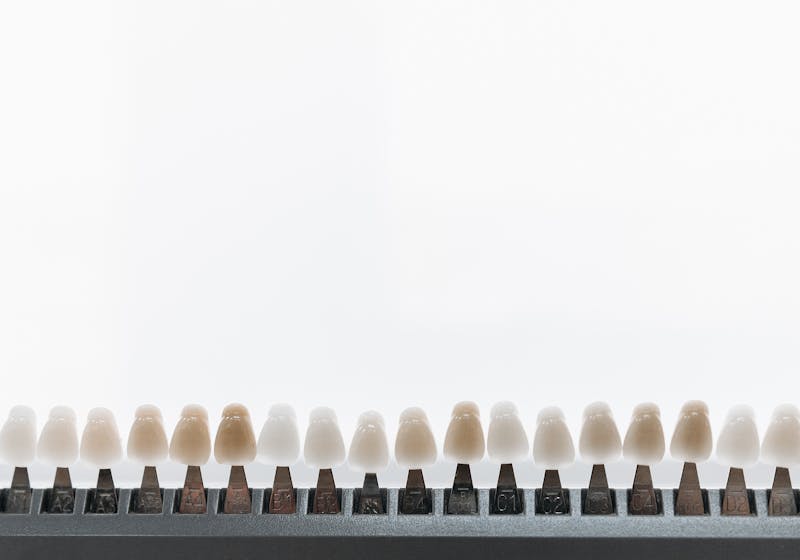
Coffee stains respond very well to professional teeth whitening. The gel we use is stronger and reaches the pigment held within the enamel, not just on the surface, so the result is brighter and more even. We protect your gums first and tailor the strength to your sensitivity. To see how supervised whitening differs from a drugstore kit, read the benefits of professional teeth whitening.
What if my teeth need more than brightening?
Sometimes discolouration runs deeper than surface stain, or a patient wants to reshape teeth at the same time. In those cases cosmetic dentistry options such as bonding or veneers may be a better fit. At a consultation we look at the cause of the colour and recommend the simplest approach that gets you the result you want.
Want a brighter smile without quitting coffee?
Book a whitening consultation on Hamilton Mountain and we will show you what is possible for your teeth.
Book an Appointment